
I wrote a while back about some of the issues with the war against masculinity, and also the war for masculinity. I proposed that we often shoot ourselves in the foot in our good intentions, and that the only true path to masculinity comes from the sacrificial love of Christ revealed in the Cross. This time, I want to focus on what I believe is the deeper problem in our culture: the war against the heart.
In historical Christianity and Old Testament Judaism, everything was about the heart. The heart was the temple where God was meant to dwell, with the physical temple being an icon of it. God was clear that while “man looks at outside appearance, God looks at the heart.” (1 Samuel 16:7) Likewise, King David tells us in Psalm 51:
For You do not delight in sacrifice, or I would bring it
You take no pleasure in burnt offerings
The sacrifices of God are a broken spirit
A broken and humble heart
O God, You will not despise
Unfortunately, the concept of the heart has slowly been lost in the modern world. We now have the false human dichotomy of logic vs emotion, but the heart was actually unrelated to these. The heart was the part of us that directly connected to the world and to others as a living experience, and was often called the “nous” in the Scriptures and the early Church. As an example, one could say that when you feel the sun hit your skin, this is the heart/”nous” communing with the sun and its rays. It is after this that you might have an emotional reaction to this, or you might rationally conceptualize what is happening with abstract scientific knowledge. But the heart comes first, and is most important.
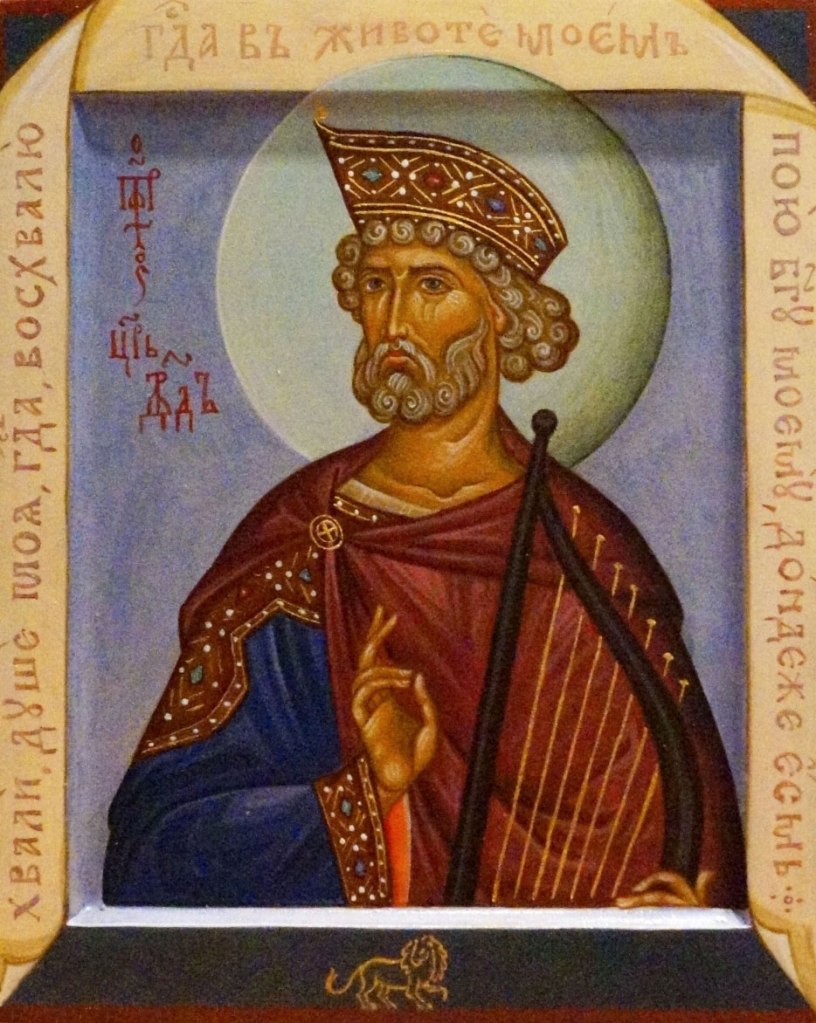
While the Masoretic text of the Old Testament says the heart was deceitful above all things, the Septuagint text (the translation most quoted by Christ) says that: “The heart is deep beyond all things, and it is the man, and who can know him?” (Jeremiah 17:9) It was actually the gut that was associated with deceitful emotions in ancient times, but the heart was associated with man’s spiritual center, an infinitely deep place where both good and evil waged battle. It was also different than today’s concept of the logical mind, but the word “nous” is unfortunately translated “mind” in most modern translations which makes people think of logic and reason.
The word repentance itself in Greek is “metanoia” which means change of “nous.” The “nous” or heart was considered the holy place of the human being, or even the “holy of holies”, the center of the heart where only God belongs. While we often misunderstand what Scripture means by repentance, or by this word “nous” translated as “mind”, the people hearing Christ preach repentance would know that repentance meant a change of heart, or more specifically, pointing the heart away from created things and back to the Creator. This is the battle all mankind must face, hence why this message is so universal.
“The line separating good and evil passes not through states, nor between classes, nor between political parties either — but right through every human heart — and through all human hearts. This line shifts. Inside us, it oscillates with the years. And even within hearts overwhelmed by evil, one small bridgehead of good is retained.”
+ Aleksandr Solzhenitsyn, The Gulag Archipelago
What is key is that God is meant to dwell in the temple of the human heart, unlike our logic or emotions. God is meant to be our center in a real way, not just something to stir good feelings or to believe in factually, as even the demons do ― and shudder. (James 2:19) But when we are distant from God, when we operate without Him as Eve did in the Garden, it leads to spiritual illness. It leads to us trying to fulfill our desires in our own way, instead of seeking Him to satisfy us. In the end, this self-trust leads to sins, to broken ways of operating in the world. These are obvious external signs that something has gone wrong in the heart, symptoms revealing a deeper illness of heart. Unfortunately, many became focused on those external symptoms, like a doctor focused on stopping a cough instead of healing pneumonia.
The message that Christ brings is that messing up His laws with repentance is still more pleasing to God than following the laws with pride. At the core of pride is self-centrism, and at the core of humility is other-centrism. In most stories, what makes the hero is that he thinks about others first, and also that he sees he needs help, and what makes the villain is using others for himself and trusting his own power and vanity. Thus, a person who sees their need for Christ has a soft heart, like fertile soil, hence why they are called “humble”, from the word “humus” meaning earth or dirt. This is shown clearly in the parable of the tax-collecting Publican and the Pharisee, where the Publican focused on His need for God, and the Pharisee boasted of his adequacy before God. Jesus said it was only the Publican who walked away right with Him.
The religion of Old Testament Judaism and New Testament Christianity is and has always been about the heart, and repeatedly God is clear that what He wants most is a good heart, one that is humble and loving. “For I desire mercy and not sacrifice, and the knowledge of God more than burnt offerings.” (Hosea 6:6) All God-given sacrifices and rituals are about the healing of the heart, as are all of His laws, hence why the Law is said to be “written on the heart.” As the Beatitudes of Christ are clear, the blessed ones are the poor in spirit, not the rich or those who can follow the laws. Sadly, when we are at fault, we can always turn to the law to misuse it. We can always abuse the knowledge of good and evil in order to hide from facing our hearts, as Adam blamed God and Eve for his own failures in the Garden of Eden. Thus, the early Christians often said that God could not save a man who justified himself.
So, in order for us to face our deepest needs, we need to face the heart. We need to see how we fail to live up to the standard, and we need to be honest with ourselves. We need to live a life of seeking Christ and others to help us amend this illness, to seek our hearts to be filled with love, which flows from Christ. “Everyone who loves has been born of God and knows God. Whoever does not love does not know God, because God is love.” (1 John 4:7-8) All of the commandments, Old Testament and New, are meant to show us our need for God, to push us to seek Him for the healing of our hearts. This is why Hosea 6:6 linked mercy with knowledge of God.
The historical Christian spiritual life had a strong focus on constant warfare with the passions, which are sins that have been repeated so often that they worm their way into our hearts and feel natural to us. In the Old Testament they were recognized as idolatry, and today we might call them addictions. Scripture tells us to “crucify your passions” (Galatians 5:24), and through prayer to replace the empty space opened up in the cleansed heart with Christ. We see this in Christ chasing the moneylenders out of the temple. They use it as a place of transactions for their own benefit instead of a place to love God and acquire love for others. Likewise, the trials and crosses God allows are meant to cleanse the passions, the transactional and selfish parts of us in our hearts, so that we will have more room for Christ and for love.

Unfortunately, instead of looking at our hearts, the great temptation is to look outwardly. Instead of being honest with how we contribute to the broken world, we blame others. We spend our lives looking at how men or women, left or right, rich or poor, or different ethnicities are the problem, when deep down the problem anywhere and everywhere is human selfishness. Worse, by focusing on finding a scapegoat, we actually make our own contributions to the evil of the world even worse! We become hypocrites in the process, wanting others to look at their faults but being unwilling to look at our own.
In most ancient cultures, people taught the importance of virtue, which is the love of goodness in the heart as an end in itself. Laws were seen as a backup for when people failed to value virtue, but laws in themselves did not produce truly good people. Even in modern murder trials, the precise motive of the perpetrator is taken into account with the punishment. What has happened recently, unfortunately, is that there seems to be a desire in our culture to remove the concept of the heart and of virtue. One can watch films from several decades ago where characters would talk about right and wrong, both as virtues and as valuing the law. Now, many stories and television shows avoid discussion of the topic of good and evil entirely, portraying characters who operate purely by what they feel. Characters don’t explain to others their intentions except in terms of pain and avoiding pain, and many opportunities to discuss an appeal to the good are avoided for selfish, personal reasons. There’s a clear substitution of virtue with the valuing of selfish survival, an empty and evil moral system rooted in nihilism.
We see a similar problem in the current culture of Diversity, Equity, and Inclusion. If you listen to black activists from decades ago, they’ll talk about how racism is about a heart that thinks of people of certain races as lesser, or a heart that despises them and hates them. Now, racism is being more and more disconnected from the heart, and instead points to outward mechanisms. If you think you aren’t racist, but you are in any way part of a system deemed “unequal”, then you are racist “systematically.” Even the word “hate,” which used to be about despising someone, is now said to be about causing someone suffering, or even just being inconsiderate or oversimplifying. The only moral standard has become causing pain, and the only moral goal has become comfort.
We saw this just recently with the responses to the death of Charlie Kirk. People who wave the banner of love, who say the reject hate speech, seem to let these values blind them to their own hatred. They have disconnected the idea of loathing another human being from the word “hate,” and have substituted an idea more akin to “opposing my group” or values. Thus, they can rationalize in their head that they are fighting hatred, all while justifying and promoting the epitome of hatred: celebrating and relishing in the destruction of an innocent human life. Of course, they will say he wasn’t innocent, because in some distant way he might have contributed to human suffering, which is their definition of hateful. Yet on those grounds alone they are perfectly fine with completely dehumanizing him. It can be summed up as “right makes might”, where the fact that your views are correct gives you a justification to treat people in ways that you would condemn them for treating you.
We ourselves participate in this destructive way of thinking, of utilitarian legalism, when we play the blame game. We blame landlords or tenants, men and women, the rich and the poor, ethnic groups, etc. even though these groups all have virtuous people and nefarious people. There may be value in analyzing the specific ways each group can go wrong, the “systematic” problems as today’s progressives call them, but making these the core problems rather than symptoms distracts from the true problem, which is the human heart. We lock ourselves in the flow of the pendulum swing, each generation overreacting to the last and then creating the new movement for the next generation to blame. As Frank Herbert’s book Dune says: “In every revolution are the seeds of its own demise.”
Today we are used to many disputes over political strategies: communism, socialism, fascism, capitalism, etc. We desperately want a way out of pain and suffering, a society that makes us feel good, and also takes away our guilt over our own comfort. However, the truth is that all these systems only are necessary to solve problems that come from selfish human hearts, and since all these systems are run by humans, they cannot solve the root problem of evil. We blame the systems because if we faced our hearts, we’d know none of them will save us and our efforts are futile. All four systems have lead to deaths in the millions, and these false gods will continue to take in human sacrifices from a humanity that does not look at its heart.
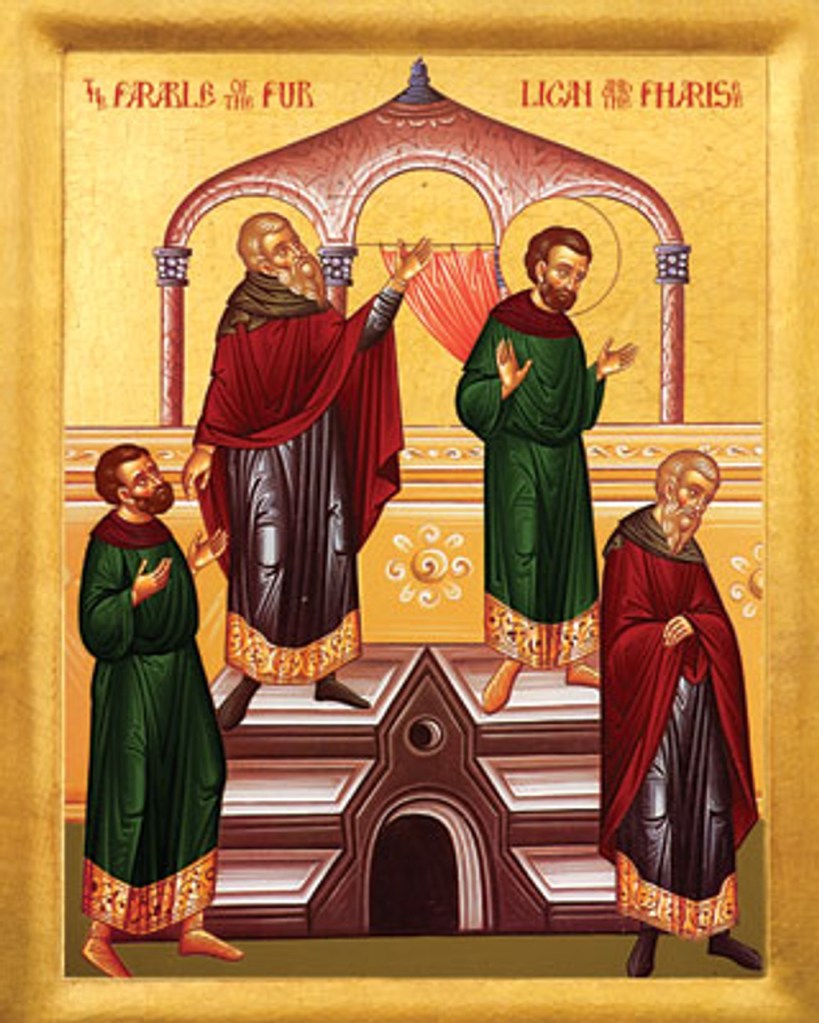
I think if we’re honest, we’ll see this everywhere. In the Pharisees it was their following of the law, but their ignoring of their hearts, which were full of pride. With masculinity, it is being a “macho” guy or a “nice” guy, both of which are outward, image-driven substitutes for actual masculinity. We see virtue signaling and piety signaling which are outward attempts to look like we have a good heart, but we also see people use these accusations cheaply, not considering that they might not actually understand the person’s motives, not caring to remember that they cannot read hearts as God does. Ignoring the heart gives us power, comfort, security, validation, self-righteousness.
If we were honest and admitted that hearts were the problem, we’d have to face our own heart, something that we deeply dislike doing. If we looked at our own heart, we might lose our justification for our bitterness. We fear that our pain might be invalidated if we find selfishness in our heart. We might have to sacrifice. We might have to admit we’re no different than those we hate. We might have to admit our politics won’t save us. Yet, this is why we are told that the only way of healing our hearts, the only way out of such dishonest and broken hearts, is the Cross. The Cross isn’t just a symbol of God’s sacrificial act for us, but a call to a life where we are willing to sacrifice our comfort for others. We are told to participate in Christ’s cross, to take up our own that He has sent us, but not to try and blame others for the same evil that exists in us. St Paisios of Mount Athos tells us “If man doesn’t start to work on himself, then the devil will find another job for him – to look for flaws in others.”
What is the solution to this world that wants us to forget we have a heart? What do we do to fight back against a world that is more interested in self-justification than virtue? My patron Saint, Elder Thaddeus of Vitovnica, says this: “Our starting point is always wrong. Instead of beginning with ourselves, we always want to change others first and ourselves last. If everyone would begin first with themselves, then there would be peace all around!” Unless we are ready to bear the evils of others with forgiveness, unless we are willing to look at our own problems even when the problems of others seem worse… we will simply be another cog in the cycle of reactivity, as much to blame as anyone else, always complaining, always demanding change, but rejecting the path to truly change any of the things we complain about.
The only thing that can save the world is the Cross. The only thing that can heal our hearts is the perfect love of God. When we see Christ on the Cross, tormented in every way by His enemies and betrayed by His friends, we see the nature of the divine love that can heal the world. “Forgive them Father, they know not what they do.” (Luke 23:34) He says this from the bottom of His heart, with all of His being, about those who have done the greatest act of evil in human history. By attuning ourselves to Jesus Christ and to the Cross, we have a chance to make a real difference, we have a chance to produce the change that we complain isn’t happening, that we claim to want. It’s time to go to war on the spiritual level, not simply the fleshly one. The healing of the world will only come through repenting, taking up our crosses, and following Him.
Now we must decide if we actually want ourselves and the world to be healed.
“Do you want to be well?”
 Thaddeus Patrick